 |
| Source: Hotpot.ai |
Showing posts with label Donald Trump. Show all posts
Showing posts with label Donald Trump. Show all posts
Friday, 4 September 2026
Trump Is Definitely Considering Nuking Iran


Monday, 6 April 2026
The Post-Westphalian World: Reflections on Trump 2.0's Military Adventurism
The weak are meat, and the strong do eat
(Cloud Atlas)
The international rules based order sets normative expectations, deters transgressions, and manages conflicts. It does so via a host of treaties and institutions mostly introduced soon after WWII, from the Universal Declaration of Human Rights to the UN and its many affiliated organisations and treaties (WTO, UNLCOS, ICJ, World Bank, NPT, etc) to private members' clubs like the G7, EU, OECD, and NATO.
Like all institutional orders, it is maintained by and for the powerful actors in whose interests it was designed, especially the USA, the most powerful of all. This obvious fact is often willfully misinterpreted.
First, an order instituted by the powerful to protect and advance their own interests need not come at the expense of the less powerful, when compared to a situation without any such order. To the contrary, by constraining all it is often of even more value to the weak - who have no other source of protection - than it is to the strong. Merely because an international order can be judged as lacking compared to some hypothetical ideal ('fairness') does not mean that any rational state would prefer a world without it.
Sunday, 1 December 2024
Why Is Trump's Administration So Packed With Losers? They Will Be Loyal

The explanation is quite simple: Trump prefers hiring losers because they have no better option than loyalty.
Thursday, 14 January 2021
How Is It No One's Job To Defend Democracy?

Why did it take until now for a critical mass of key players to take a stand against Trump's assault on democracy? Why wasn't it already enough when he pointedly declined to promise to accept the results of the election if he lost, during the 2016 presidential debates?
Liberal democracy is like capitalism, a game designed to make its players compete against each other for points and prizes. Competition is the driving force behind the real benefits such systems achieve, but the logic of competition also imprisons its players to stay within their roles. It is no one's job to defend the system of rules governing that competition. As a result, democracies are surprisingly vulnerable to take over, as we have seen from the recent examples of Turkey, Hungary, and (ongoing) India.
Monday, 8 October 2018
No One Actually Believes Fake News. So What's The Problem?
The statistics are shocking. A Russian troll farm created false anti-Clinton stories and distributed them on platforms like Facebook and Twitter. As many as 126 million Facebook users may have encountered at least one piece of Russian propaganda; Russian tweets received as many as 288 million views. The Russians, like Trump's campaign itself, leveraged the AdTech infrastructure developed by social media companies like Facebook, Google, and Twitter to identify and target those most receptive to their lies and provocations.
What is going on? Is this something new? Does it matter?
Friday, 27 July 2018
Tyrants Aren’t Smarter Than Democrats. Just More Evil
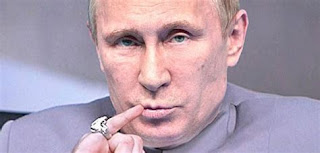
A common explanation is that these tyrants are better at playing the game. They are strategic geniuses leading governments with decades of experience in foreign affairs and characterised by single-mindedness and a long-term horizon. Of course they are going to make better geopolitical moves than democratic governments riven by political factionalism and only able to think as far ahead as the next election.
This explanation is wrong. Tyrants don’t succeed because they are especially skilled at the game of geopolitics, but because they are baddies. Tyrants make bold moves because they are willing to subject their country (and the whole world) to more risk. They can do that because they care less than democrats, and hence worry less, about bringing harms to their people. Like a hedge fund manager, they can afford to take big risks because they are not playing with their own money. When tyrants win it is because of luck, not brilliance. This is easier to see when tyrants lose – as they nearly all do in the end, when their luck runs out.
Thursday, 15 February 2018
Can Free Speech Survive the Internet?
The internet has made it easier than ever to speak to others. It has empowered individuals to publish our opinions without first convincing a media company of their commercial value; to find and share others' views without the fuss of photocopying and mailing newspaper clippings; and to respond to those views without the limitations of a newspaper letter page. In this sense the internet has been a great boon to the freedom of speech.
Yet that very ease of communication creates new limits to the freedom part of free speech: the ability to speak our mind to those we wish without fear of reprisal.
Wednesday, 29 November 2017
The Revolt Against Liberalism: Diagnosing and Defeating Populism
Experience suggests that if men cannot struggle on behalf of a just cause because that just cause was victorious in an earlier generation, then they will struggle against the just cause. They will struggle for the sake of struggle. They will struggle, in other words, out of a certain boredom: for they cannot imagine living in a world without struggle. And if the greater part of the world in which they live is characterized by peaceful and prosperous liberal democracy, then they will struggle against that peace and prosperity, and against democracy. (Francis Fukuyama, The End of History, p.330)
Liberal democracy won the Cold War but a generation later it is losing the peace. In country after country across the comfortable, safe, prosperous western world populist parties and movements dedicated to its overthrow are advancing steadily towards power. Why is this happening? A righteous indignation enabled by complacency. What can be done? Radical liberalism
Subscribe to:
Posts (Atom)