Sunday, 24 November 2013

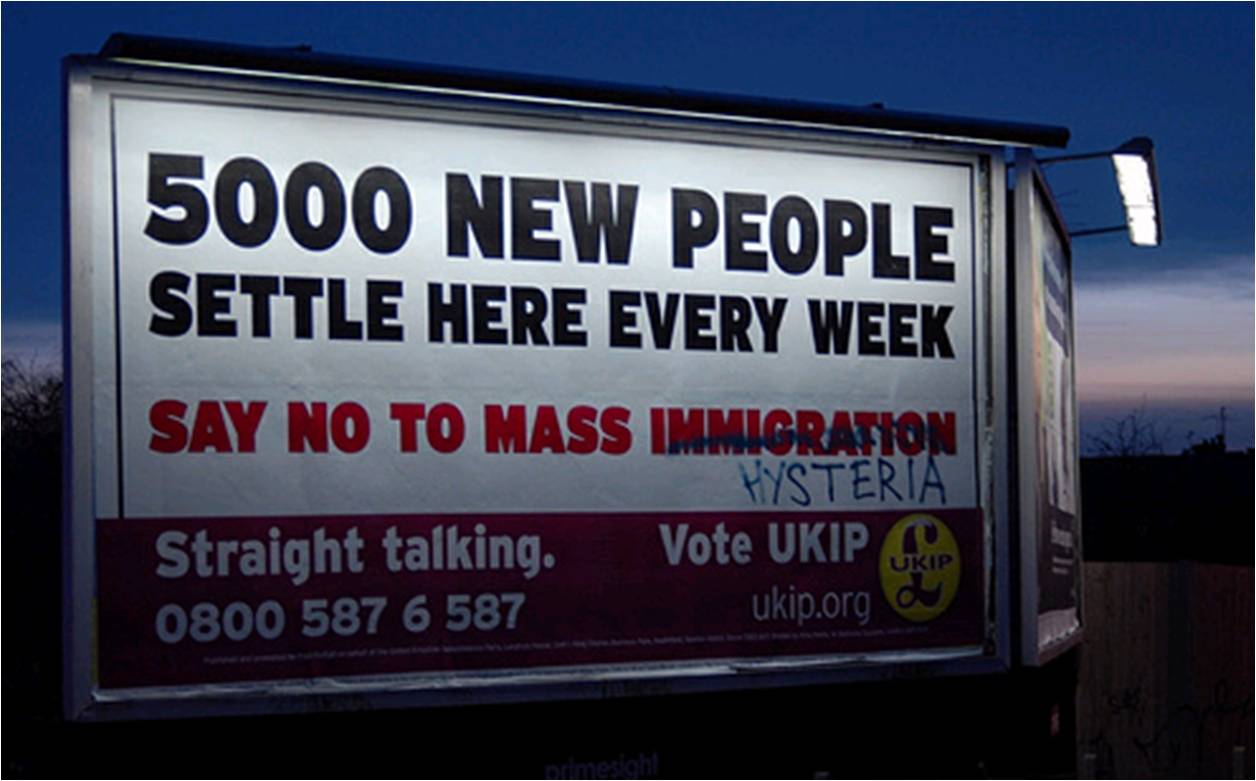
Britain's Sudden and Bizarre Resentment of Migration

Source
All three of Britain's major political parties are competing to sound tough on migrants. I can't really condemn them for that, however, since they seem to be reluctantly acceding to the popular demand reflected in the opinion polls and the rise of 'nativist' political parties like UKIP. The successful diffusion of anti-racist social norms in recent decades has constrained the most natural expressions of anti-migrant prejudices. But the bizarre arguments now being trotted out about the harm foreigners do to British prosperity, rights, and culture remain an expression of xenophobia rather than reason.

Friday, 22 November 2013

The myth that rights come with duties

Governments and tabloid newspapers constantly bemoan the unbalanced character of civil and human rights. "Don't they realise that society will collapse if rights are not balanced by duties?" they cry. The superficial attractiveness of this reactionary rhetoric has done much to undermine public support for the concept of rights. It must be challenged.

Thursday, 14 November 2013

Moral philosophy about global warming

What contribution can moral philosophers make to public reasoning about global warming?

I make two recommendations, concerning style and substance. First, moral philosophers should be oriented to investigating rather than moralising. Our contributions to public reasoning about global warming must do more than select and promulgate an existing moral account in the usual style of normative ethics. Our work should engage with the moral complexity of the issue rather than exhort the public to follow some simplified view. Second, moral philosophers should make particular efforts to engage collaboratively rather than adversarially with social scientists working in this area. The natural sciences alone are an insufficient basis for analysing the causes of global warming and its meaning for us. Economics in particular can be seen as a branch of applied moral philosophy, and is rich in concepts and techniques highly relevant to the moral understanding of global warming.

Sunday, 3 November 2013

Why I do not wear a poppy

It is that time of the year again. Volunteers at train stations and shopping centres, often wearing military uniforms, are selling little red paper and plastic poppies to remember the service of British veterans. These little paper poppies have long taken over the official remembrance day and converted it into a month long ritual from which one cannot opt out without having to take a position. Well, here is my position.

I reject the coerciveness of the poppy ritual, the way it tries to bring everyone together around a single shared narrative of remembrance, with its compulsory yet glib emotions of gratitude and sorrow. I reject the unquestioning acceptance of the value of that military service and the implied necessity and meaningfulness of war in general. And I reject the government's intimate involvement. What should be an occasion for remembering the political failures that lead to wars has been neatly converted into a propaganda exercise that forecloses reasoned public scrutiny of our government's past, present and future militarism.

Thursday, 12 September 2013

The real Adam Smith problem: How to 'live well' in commercial society

Adam, Adam, Adam Smith
Listen what I charge you with!
Didn’t you say
In the class one day
That selfishness was bound to pay?
Of all doctrines that was the Pith,
Wasn’t it, wasn’t it, wasn’t it, Smith?
(Stephen Leacock, Hellements of Hickonomics, 1936)

Friday, 23 August 2013

Holding tyrants personally accountable

The newspapers today are full of pictures of Syrian children gassed in their sleep. An atrocity that, like those which preceded it, the world seems powerless to prevent or punish. Our inter-national institutions are manifestly unable to secure peace and justice. Their tools - diplomatic, economic, and military sanctions - are limited in effectiveness even when they can be used at all. Yet perhaps there is something that we can do about such moral outrages. It was long believed to be a duty of all good men to kill a tyrant. My suggestion is that we revive the tradition of tyrannicide, but make it even more effective by finding a way to give bad men a good reason to kill a tyrant.

Friday, 31 May 2013

Seizing the Utopian Possibilities of our Robot Future


Baxter is coming for your job
According to increasingly credible accounts (egeg, eg), the robot economy is on its way. Perhaps by as early as 2040 robots will be smart and dexterous enough to do pretty much everything humans call work as well as or better than us, and at a lower cost. If this scenario comes about, human societies and indeed the human condition will be radically changed. But will this future be utopian or dystopian? At least two dystopian threats must be actively addressed: inequality and meaninglessness.