Your country has probably done some very bad things. Perhaps recently, perhaps before you or even your parents were born. How do you feel about that? Does your present government have a duty to make amends for the bad things it has done, for example with apologies and reparations? Intuitively most people think so, but what kind of duty is that and what does it require from you as a citizen or subject? And how can you get other countries to admit that they have done wrong?
Thursday, 12 April 2012
Thursday, 29 March 2012
Economists and the Crisis: a story of denial and opportunism
It is now generally understood that our present economic crisis was not caused by external factors but by dynamics internal to the system. Economists as a profession - in academia, government, international institutions, and the financial industry - failed to grasp the fundamental instability of the system they are all, in one way or another, paid as experts to understand and help us master. Furthermore they have largely failed to predict each iteration of the crisis as it has mutated from investment bank liquidity crunch to general financial sector insolvency, to a credit crisis on main street, to an economic recession on everyone’s street, to a threat to government solvency and the international political crisis in the Eurozone. This is not only because prediction is very difficult in social sciences, but because the situation in the real economy has fallen outside orthodox (neo-classical) economics’ standard models and theories (which excluded such extraneous elements as the banking system). Their theoretical expertise has been painfully irrelevant throughout the crisis, and we have been saved from a second Great Depression rather by the informal arts of political economy than by economic theory per se.
It is not only the economy, but also the study of the economy which is in crisis. How have economists responded? A mixture of denial and opportunism.
It is not only the economy, but also the study of the economy which is in crisis. How have economists responded? A mixture of denial and opportunism.


Tuesday, 21 February 2012
Reading Jane Austen as a moral philosopher
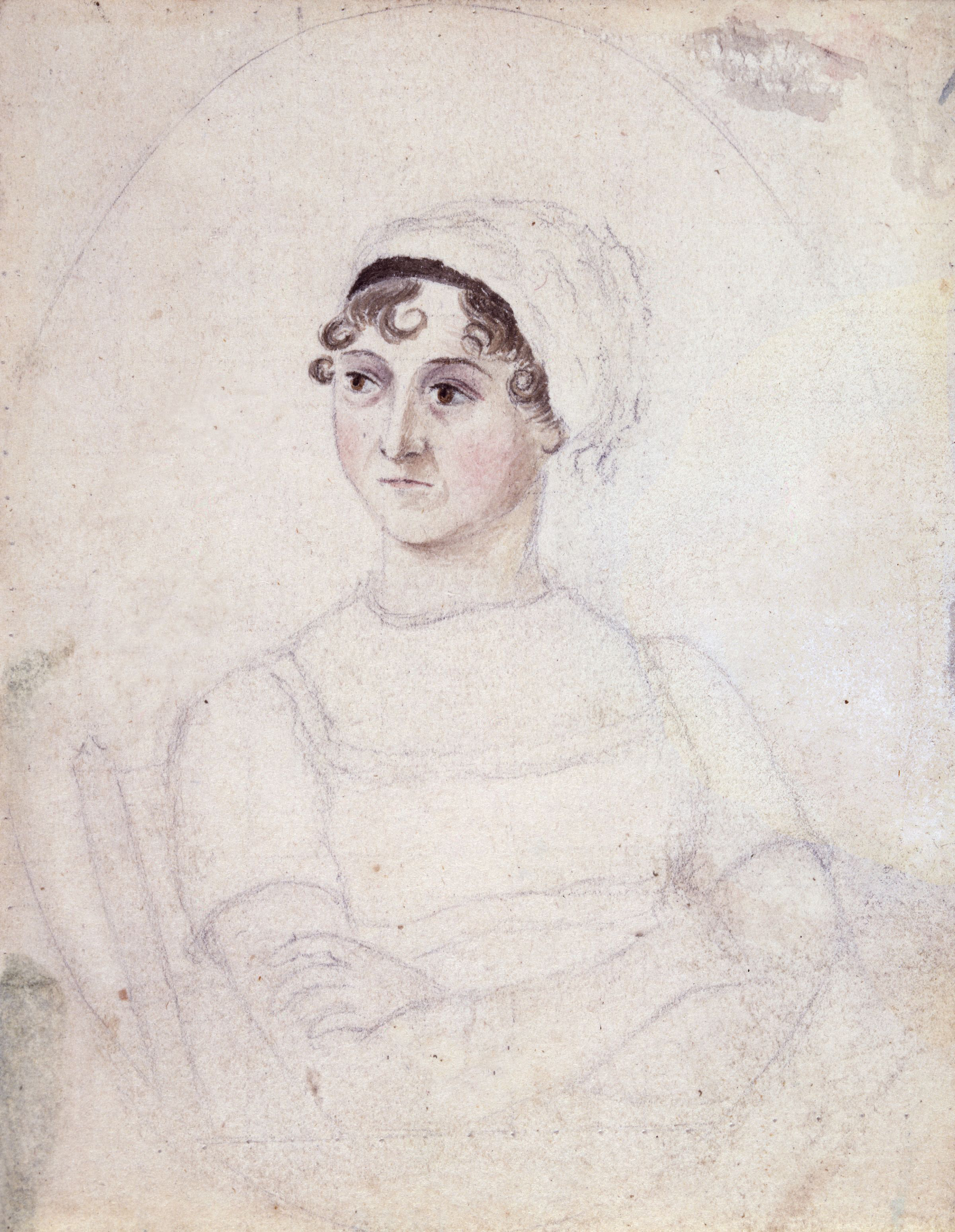
Jane Austen wrote delicious romantic comedies about middle-class girls looking for a good husband among the landed gentry of Regency England. But if that were all there was to it we wouldn't take her any more seriously now than the genre hacks published by Mills and Boon.
In this essay I want to explain what I think makes Austen so special. She was a brilliant moral philosopher who analysed and taught a virtue ethics for middle-class life that is surprisingly contemporary. Appreciating this can help us understand why she wrote the way she did and how we should read her today.
In this essay I want to explain what I think makes Austen so special. She was a brilliant moral philosopher who analysed and taught a virtue ethics for middle-class life that is surprisingly contemporary. Appreciating this can help us understand why she wrote the way she did and how we should read her today.
Friday, 6 January 2012
Recovering Adam Smith's ethical economics
While some men are born small and some achieve smallness, it is clear that Adam Smith has had much smallness thrust upon him (Amartya Sen)
Adam Smith is famous for founding economics as an independent field of study by synthesising and systemizing classical economics in The Wealth of Nations. But he was also a significant moral philosopher in his own right who deserves to be recognised alongside his close friend David Hume as a key figure in the Scottish Enlightenment. Smith saw economics as a branch of moral philosophy, and he saw capitalism as an ethical project whose success required political commitment to justice and freedom, not merely an understanding of economic logistics.
Monday, 5 December 2011
Democracy is not a truth machine
In a democracy people are free to express their opinions and question those of others. This is an important personal freedom, and also essential to the very idea of government by discussion. But it has also been held to be instrumentally important because in open public debate true ideas will conquer false ones by their merit, and the people will see the truth for themselves. In other words, democracy has an epistemic function as a kind of truth machine. From this it follows that in a democracy there should be no dogma: no knowledge protected from public challenge and debate. Yet this whole argument is founded on embarrassing misconceptions of the nature of truth and of the working of democracy.
Sunday, 13 November 2011
Criminal justice in the modern age

Thursday, 3 November 2011
The cult of victimhood
Victims are everywhere these days, whining about one thing or
another. Sometimes they are still complaining about things that happened
decades ago (or even hundreds of years ago to other people with the
same skin colour); sometimes they seem to be 'status-victims' who feel
entitled to oppress others because of their special personal sense of oppression. Very few
seem to be complaining justifiably, or even comprehensibly, about some
genuinely significant injustice being done to them right now that others
should address. This is not healthy. Much of the limited space for
morality in politics is being taken over by the study and art of
victimhood at the expense of proper moral reasoning. It has a
deleterious effect on public discourse and behaviour, with people
seeming to compete more about their degrees of victimhood than the
rights and wrongs of their case.
Subscribe to:
Posts (Atom)