Friday, 27 July 2018

Tyrants Aren’t Smarter Than Democrats. Just More Evil

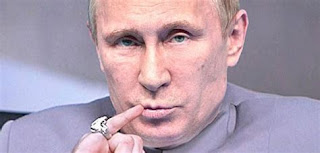
Tyrants like Vladamir Putin and Kim Jong Un seem to win a lot of their geopolitical contests against democratic governments. How do they do it?
A common explanation is that these tyrants are better at playing the game. They are strategic geniuses leading governments with decades of experience in foreign affairs and characterised by single-mindedness and a long-term horizon. Of course they are going to make better geopolitical moves than democratic governments riven by political factionalism and only able to think as far ahead as the next election.
This explanation is wrong. Tyrants don’t succeed because they are especially skilled at the game of geopolitics, but because they are baddies. Tyrants make bold moves because they are willing to subject their country (and the whole world) to more risk. They can do that because they care less than democrats, and hence worry less, about bringing harms to their people. Like a hedge fund manager, they can afford to take big risks because they are not playing with their own money. When tyrants win it is because of luck, not brilliance. This is easier to see when tyrants lose – as they nearly all do in the end, when their luck runs out.

Thursday, 15 February 2018

Can Free Speech Survive the Internet?

The internet has made it easier than ever to speak to others. It has empowered individuals to publish our opinions without first convincing a media company of their commercial value; to find and share others' views without the fuss of photocopying and mailing newspaper clippings; and to respond to those views without the limitations of a newspaper letter page. In this sense the internet has been a great boon to the freedom of speech. 

Yet that very ease of communication creates new limits to the freedom part of free speech: the ability to speak our mind to those we wish without fear of reprisal.

Monday, 22 January 2018

Productivity is the Wrong Argument for Diversity

If you look around your workplace and everyone, or least all the managers, look the same - same sex, skin colour, social class, age - then your company has a diversity problem. But why is it a problem?

Because the most obvious explanation is a failure of meritocracy. Such features as the colour of one's skin or sex are arbitrary and irrelevant to people's ability to do a job. Therefore the fact that people of certain skin colours or sex are missing from your workplace relative to the wider society presents a prima facie challenge to the fairness of your company's criteria for employment and promotion. To assume otherwise - for example that people of certain colours, sex, class, age, happen to have different (inferior) career preferences or different (inferior) talents has no credibility. It is to assume the exact set of facts most convenient to make a problem someone else's, rather than to take responsibility for investigating and fixing it.

Call this the negative argument for diversity: If you don't have internal diversity in line with the wider society then you are probably treating people unfairly and you need to investigate and try to fix it. For example by identifying and mitigating biases in how job applicants are evaluated and structural impediments to their career progress. It leaves a lot of details still to be argued out, but I think it is the right way to go.

But there is another kind of argument that is now much more common, the positive argument that organisations should promote diversity because it pays off. This is the argument I want to criticise, on the grounds that it jeopardises the negative argument from fairness; reduces individuals to stereotypes about groups; and perpetuates unjust stereotypes and social relations.

Thursday, 18 January 2018

Crime Hurts. Justice Should Heal

Judicial punishment is the curious idea that individuals deserve to be punished by the state for breaking its laws. Intellectually this is rather counter-intuitive. If crime is so bad because of the social trauma it causes then setting out to hurt more people would seems a strange way to make things better. There are intellectual arguments for retributive punishment of course, many of them rather ingenious. But they have the look of post hoc rationalisations for a brute social fact: it just so happens that we like making wrongdoers suffer.

The modern criminal justice system – bloated and terroristic – is the product of government expansionism combined with this societal vindictiveness.

Wednesday, 29 November 2017

The Revolt Against Liberalism: Diagnosing and Defeating Populism

Experience suggests that if men cannot struggle on behalf of a just cause because that just cause was victorious in an earlier generation, then they will struggle against the just cause. They will struggle for the sake of struggle. They will struggle, in other words, out of a certain boredom: for they cannot imagine living in a world without struggle. And if the greater part of the world in which they live is characterized by peaceful and prosperous liberal democracy, then they will struggle against that peace and prosperity, and against democracy. (Francis Fukuyama, The End of History, p.330)
Liberal democracy won the Cold War but a generation later it is losing the peace. In country after country across the comfortable, safe, prosperous western world populist parties and movements dedicated to its overthrow are advancing steadily towards power. Why is this happening? A righteous indignation enabled by complacency. What can be done? Radical liberalism

Sunday, 5 November 2017

Welcome to Philosophy! Make the most of your time here


[Adapted from introductory remarks to my first year Ethics course at Tilburg University]

If I have calculated correctly, mine is the very first class in your new academic careers in philosophy. This is a great privilege for me, but also a great responsibility. It is also an opportunity for me to say some very general things about academic philosophy, about what to expect in the next few years and how to make the most of your studies.

Most of you will have encountered philosophy before in some form. Perhaps you took a high school class. Perhaps, you've done some reading in your spare time or watched a lecture online by a famous philosopher like Slavoj Žižek or you hang out on the philosophy reddit. Whatever your experience, doing a whole degree in philosophy is going to be much bigger and stranger and harder. For example, right from the beginning you will be reading classic works written by expert philosophers for each other, and trying to make sense of their intricately argued claims about topics - such as the computational theory of mind - that you have never heard of before. And then reading equally clever counter-arguments by other philosophers.

Studying philosophy is exhilarating, but it can also seem overwhelming. So think of this as a kind of map to help you find your way, but also as a treasure map to motivate you to keep going when things get tough. 

Saturday, 30 September 2017

Almost No Disasters Are Natural

A natural disaster is a disaster because it involves a lot of human suffering, not because the event itself is especially big or spectacular. The destruction of an uninhabited island by a volcano is not a natural disaster, because it doesn't really matter to humans. A landslide doesn't matter, however enormous, unless there is a town at the bottom of the hill.

So what does the word ‘natural' add? We use it to demarcate the edges of responsibility. We don't use it very well.